Mid-Century Modern

Postwar optimism made domestic — Case Study Houses for a California that believed design could improve every life: Eames plywood and fiberglass, Neutra's steel-frame houses opening to the canyon, and Saarinen's organic plastic furniture for the jet-age family.

Compare Mid-Century Modern with another style →
Record020-AM
AestheticMid-Century Modern
ClassNostalgic / Analog
StatusINGESTING
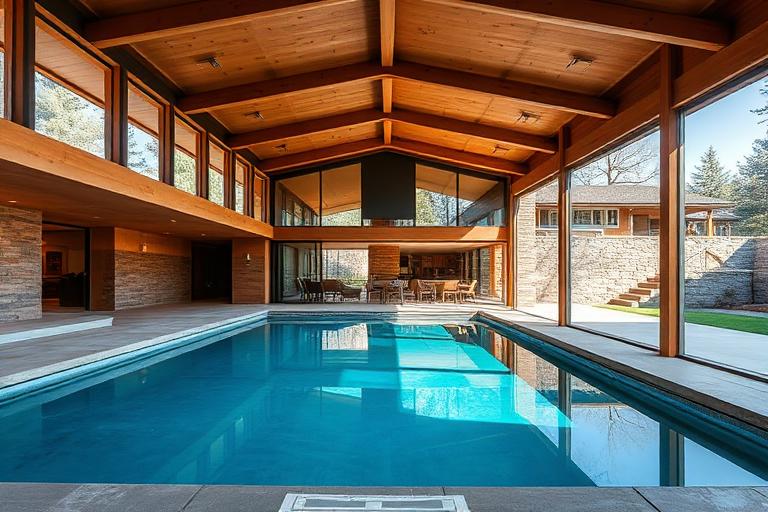
Example of the Mid-Century Modern aesthetic
Archive platearch mid century

Source document

Registrar's index cards on the platen glass — captured by the scanner

Elio Archive — Registrar's OfficeMid-Century ModernFILE 020-AM
When to use it
  • Brand identity evoking postwar American optimism, craft, and functional modernism
  • Residential and interior design brand with a mid-century heritage or aesthetic focus
  • Furniture and homeware brand with American 1950s–1960s design lineage
  • Hospitality brand in a significant mid-century building or community
Perfect for
  • Furniture and homeware brands with a genuine or referenced mid-century design heritage
  • Residential developers and interior designers targeting design-literate homebuyers
  • Boutique hotels in preserved mid-century modern properties — Palm Springs, Fire Island
  • Lifestyle brands communicating functional optimism and material warmth
What it looks like
  • Charles & Ray Eames — Case Study House #8 (Eames House), Pacific Palisades (1949)
  • Richard Neutra — Kaufmann Desert House, Palm Springs (1946)
  • Eero Saarinen — Tulip Chair / Pedestal Collection (1956)
  • Pierre Koenig — Case Study House #22 (Stahl House), Los Angeles (1960)

Aesthetic profile

8-channel console — dominant channels taped & circled by the registrar

Attribute Console — 020-AM 8 CH ACTIVEFIG. 1
CH01Minimal
MaximalL·30
CH02Analog
DigitalL·40
CH03Restrained
ExpressiveCTR·0
CH04Cool
WarmR·40
CH05Futuristic
NostalgicR·50
CH06Structured
ChaoticL·40
CH07Dark
LightR·40
CH08Organic
GeometricR·10

strongest channels circled — leans nostalgic, analog, warm ✦

Profile card

Your aesthetic passport — share the fingerprint

Aesthetic Profile
Mid-Century Modern
Modern Movement
1945–1969
MinimalAnalogExpressiveWarmNostalgicStructuredLightGeometric
NostalgicAnalogWarm4 materials
eliosignal.com/styles/arch-mid-century

Material assembly

The style's primary materials, assembled bottom-up

Tap a stratum for material detail · Full catalog

Place in history

Modern Movement · 1945–1969 — tap any style to travel

Mood Board

Sign in to generate

Sign in to generate a mood board

Sign in

Editorial Depth

Sign in to unlock

Historical Context
Key Practitioners
What to Avoid

Sign in for editorial depth

Sign in

Cross-references

Architectural ModernismScandinavian ArchitectureOrganic ArchitecturePrairie Style

About this aesthetic

What is the Mid-Century Modern aesthetic?
Postwar optimism made domestic — Case Study Houses for a California that believed design could improve every life: Eames plywood and fiberglass, Neutra's steel-frame houses opening to the canyon, and Saarinen's organic plastic furniture for the jet-age family.
When should I use the Mid-Century Modern aesthetic?
Use it for: Brand identity evoking postwar American optimism, craft, and functional modernism; Residential and interior design brand with a mid-century heritage or aesthetic focus; Furniture and homeware brand with American 1950s–1960s design lineage; Hospitality brand in a significant mid-century building or community.
What is the Mid-Century Modern style perfect for?
Perfect for Furniture and homeware brands with a genuine or referenced mid-century design heritage, Residential developers and interior designers targeting design-literate homebuyers, Boutique hotels in preserved mid-century modern properties — Palm Springs, Fire Island, Lifestyle brands communicating functional optimism and material warmth.
What does the Mid-Century Modern aesthetic look like?
Visuals typically feature: Charles & Ray Eames — Case Study House #8 (Eames House), Pacific Palisades (1949); Richard Neutra — Kaufmann Desert House, Palm Springs (1946); Eero Saarinen — Tulip Chair / Pedestal Collection (1956); Pierre Koenig — Case Study House #22 (Stahl House), Los Angeles (1960).

Build with the mid-century modern aesthetic

Elio turns aesthetic references into on-brand visuals. Generate, compose and publish from one studio.

Join the waitlist