Architectural Postmodernism

Irony, quotation, and ornament returned — Venturi told architects to learn from Las Vegas, Johnson put a Chippendale top on a skyscraper, and Graves painted Portland's city hall in peach and blue.

Compare Architectural Postmodernism with another style →
Record020-AP
AestheticArchitectural Postmodernism
ClassMaximal / Expressive
StatusINGESTING
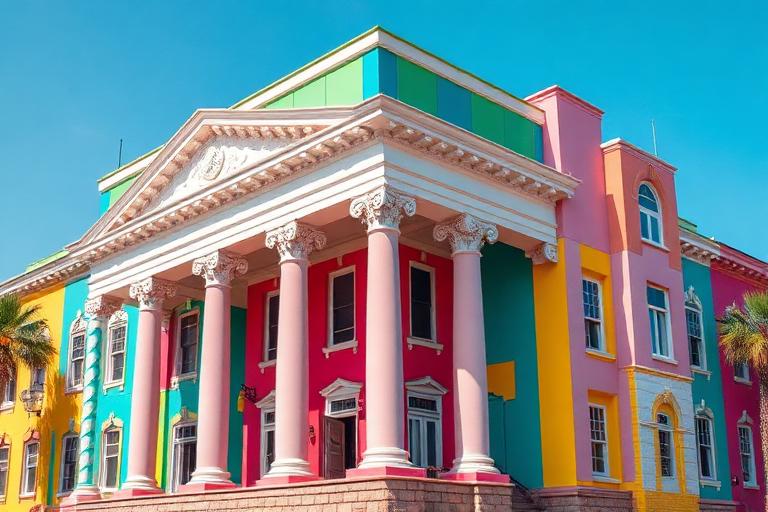
Example of the Architectural Postmodernism aesthetic
Archive platearch postmodernism

Source document

Registrar's index cards on the platen glass — captured by the scanner

Elio Archive — Registrar's OfficeArchitectural PostmodernismFILE 020-AP
When to use it
  • Brand identity that embraces knowingness, wit, and historical wink
  • Fashion or lifestyle campaigns playing with pastiche and deliberate excess
  • Cultural institution branding that wants complexity over clarity
  • Editorial and publication design mining the 1980s postmodern archive
Perfect for
  • Lifestyle and fashion brands with intellectual irony as a voice
  • Cultural institutions, galleries, and museums with eclectic collections
  • Hospitality and restaurant brands leaning into maximalist design conversation
  • Creative agencies wanting to signal historical awareness and cultural range
What it looks like
  • Philip Johnson — AT&T Building (now 550 Madison Avenue), New York (1984)
  • Michael Graves — Portland Building, Oregon (1982)
  • Robert Venturi — Gordon Wu Hall, Princeton University (1983)
  • Terry Farrell — TV-am Headquarters, Camden, London (1982)

Aesthetic profile

8-channel console — dominant channels taped & circled by the registrar

Attribute Console — 020-AP 8 CH ACTIVEFIG. 1
CH01Minimal
MaximalR·60
CH02Analog
DigitalL·10
CH03Restrained
ExpressiveR·60
CH04Cool
WarmR·30
CH05Futuristic
NostalgicR·20
CH06Structured
ChaoticR·40
CH07Dark
LightR·30
CH08Organic
GeometricR·20

strongest channels circled — leans maximal, expressive, chaotic ✦

Profile card

Your aesthetic passport — share the fingerprint

Aesthetic Profile
Architectural Postmodernism
Postmodern
1970–1995
MaximalAnalogExpressiveWarmNostalgicChaoticLightGeometric
MaximalExpressiveChaotic2 materials
eliosignal.com/styles/arch-postmodernism

Material assembly

The style's primary materials, assembled bottom-up

Tap a stratum for material detail · Full catalog

Place in history

Postmodern · 1970–1995 — tap any style to travel

Mood Board

Sign in to generate

Sign in to generate a mood board

Sign in

Editorial Depth

Sign in to unlock

Historical Context
Key Practitioners
What to Avoid

Sign in for editorial depth

Sign in

Cross-references

Classical ArchitectureNeoclassical ArchitectureStripped ClassicismArt Deco Architecture

About this aesthetic

What is the Architectural Postmodernism aesthetic?
Irony, quotation, and ornament returned — Venturi told architects to learn from Las Vegas, Johnson put a Chippendale top on a skyscraper, and Graves painted Portland's city hall in peach and blue.
When should I use the Architectural Postmodernism aesthetic?
Use it for: Brand identity that embraces knowingness, wit, and historical wink; Fashion or lifestyle campaigns playing with pastiche and deliberate excess; Cultural institution branding that wants complexity over clarity; Editorial and publication design mining the 1980s postmodern archive.
What is the Architectural Postmodernism style perfect for?
Perfect for Lifestyle and fashion brands with intellectual irony as a voice, Cultural institutions, galleries, and museums with eclectic collections, Hospitality and restaurant brands leaning into maximalist design conversation, Creative agencies wanting to signal historical awareness and cultural range.
What does the Architectural Postmodernism aesthetic look like?
Visuals typically feature: Philip Johnson — AT&T Building (now 550 Madison Avenue), New York (1984); Michael Graves — Portland Building, Oregon (1982); Robert Venturi — Gordon Wu Hall, Princeton University (1983); Terry Farrell — TV-am Headquarters, Camden, London (1982).

Build with the architectural postmodernism aesthetic

Elio turns aesthetic references into on-brand visuals. Generate, compose and publish from one studio.

Join the waitlist