Vernacular Architecture

Building without architects — the Cycladic whitewash village, the Malian mud mosque, the Norwegian stave church: forms that evolved over centuries in direct response to climate, material, and community without a single drafting table.

Compare Vernacular Architecture with another style →
Record020-AV
AestheticVernacular Architecture
ClassAnalog / Nostalgic
StatusINGESTING
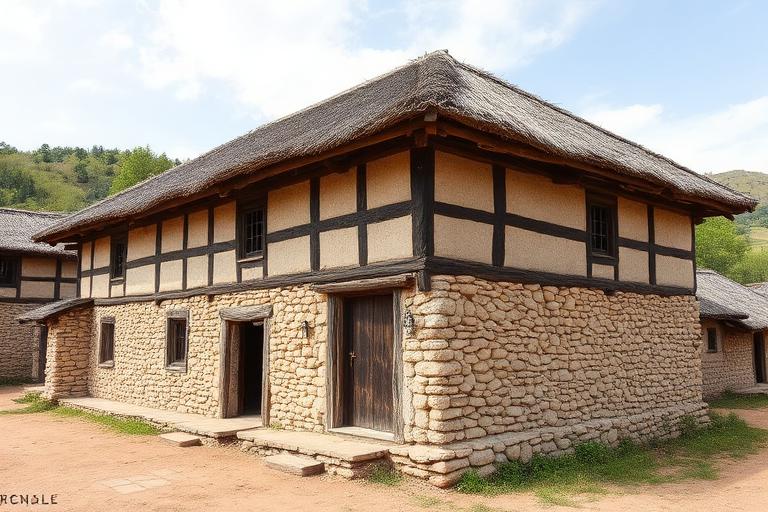
Example of the Vernacular Architecture aesthetic
Archive platearch vernacular

Source document

Registrar's index cards on the platen glass — captured by the scanner

Elio Archive — Registrar's OfficeVernacular ArchitectureFILE 020-AV
When to use it
  • Brand identity rooted in craft, locality, and pre-industrial material culture
  • Tourism, hospitality, or food brand connecting to specific place and land
  • Sustainability and slow-design brands rejecting industrial production
  • Heritage and conservation campaigns celebrating indigenous building traditions
Perfect for
  • Boutique hotels, agritourism, and destination hospitality brands
  • Food, wine, and artisan product brands rooted in terroir
  • Craft and material-focused architects, builders, and artisans
  • NGOs and cultural organizations working in heritage preservation
What it looks like
  • Djinguereber Mosque, Timbuktu, Mali — earthen adobe construction (1327)
  • Trulli of Alberobello, Puglia — dry-stone conical roof houses
  • Santorini Cycladic village, Greece — lime-washed cube forms on volcanic caldera
  • Borgund Stave Church, Norway — interlocking timber construction (c. 1180)

Aesthetic profile

8-channel console — dominant channels taped & circled by the registrar

Attribute Console — 020-AV 8 CH ACTIVEFIG. 1
CH01Minimal
MaximalL·10
CH02Analog
DigitalL·80
CH03Restrained
ExpressiveR·10
CH04Cool
WarmR·60
CH05Futuristic
NostalgicR·80
CH06Structured
ChaoticL·10
CH07Dark
LightR·20
CH08Organic
GeometricL·30

strongest channels circled — leans analog, nostalgic, warm ✦

Profile card

Your aesthetic passport — share the fingerprint

Aesthetic Profile
Vernacular Architecture
Vernacular
1600–present
MinimalAnalogExpressiveWarmNostalgicStructuredLightOrganic
AnalogNostalgicWarm14 materials
eliosignal.com/styles/arch-vernacular

Material assembly

The style's primary materials, assembled bottom-up

Tap a stratum for material detail · Full catalog

Place in history

Vernacular · 1600–present — tap any style to travel

Mood Board

Sign in to generate

Sign in to generate a mood board

Sign in

Editorial Depth

Sign in to unlock

Historical Context
Key Practitioners
What to Avoid

Sign in for editorial depth

Sign in

Cross-references

Critical RegionalismOrganic ArchitectureContextualismWabi-Sabi

About this aesthetic

What is the Vernacular Architecture aesthetic?
Building without architects — the Cycladic whitewash village, the Malian mud mosque, the Norwegian stave church: forms that evolved over centuries in direct response to climate, material, and community without a single drafting table.
When should I use the Vernacular Architecture aesthetic?
Use it for: Brand identity rooted in craft, locality, and pre-industrial material culture; Tourism, hospitality, or food brand connecting to specific place and land; Sustainability and slow-design brands rejecting industrial production; Heritage and conservation campaigns celebrating indigenous building traditions.
What is the Vernacular Architecture style perfect for?
Perfect for Boutique hotels, agritourism, and destination hospitality brands, Food, wine, and artisan product brands rooted in terroir, Craft and material-focused architects, builders, and artisans, NGOs and cultural organizations working in heritage preservation.
What does the Vernacular Architecture aesthetic look like?
Visuals typically feature: Djinguereber Mosque, Timbuktu, Mali — earthen adobe construction (1327); Trulli of Alberobello, Puglia — dry-stone conical roof houses; Santorini Cycladic village, Greece — lime-washed cube forms on volcanic caldera; Borgund Stave Church, Norway — interlocking timber construction (c. 1180).

Build with the vernacular architecture aesthetic

Elio turns aesthetic references into on-brand visuals. Generate, compose and publish from one studio.

Join the waitlist